Opening hours: Monday - Friday 09:00 - 20:00 Saturday 09:00 - 19:00 Sunday Closed

Opening hours: Monday - Friday 09:00 - 20:00 Saturday 09:00 - 19:00 Sunday Closed


"Anti-ageing" is a term that gets used frequently, often suggesting the idea of reversing time. In reality, modern aesthetics is increasingly defined by prevention and maintenance rather than correction. Here at Pitshanger Clinic, we centre this approach around subtle, medically led treatments that prioritise natural-looking results and your long-term skin health over short-term trends.
Increasingly, the most effective anti-ageing strategies are not about treating advanced signs of ageing later on, but about maintaining skin quality earlier and slowing the biological ageing process over time. This preventative mindset is now central to modern aesthetic medicine.
Clinically, ageing tends to show up in a few consistent ways: collagen production declines, skin loses elasticity, fine lines begin to form, and pigmentation or sun damage becomes more visible. What has changed over the past decade is not only the treatments available, but also the approach itself. Patients are no longer waiting for deeper lines or significant volume loss. Instead, they are choosing earlier, more preventative and regenerative treatments that support skin health long term.
This shift is reflected in demand. The UK aesthetics market has grown into a multi-billion-pound industry, with the non-surgical sector alone valued at around £3–£3.6 billion and continuing to grow year on year.
Before looking at specific treatments, it is important to recognise that the most effective anti-ageing strategy still begins with everyday habits:
Alongside this, we recommend a consistent skincare routine. Ingredients such as retinoids, antioxidants, and peptides form the baseline. Without this foundation, even advanced aesthetic treatments will have limited long-term impact.
One of the most important shifts in aesthetics is the move towards prevention-first and regenerative treatments. Rather than focusing on correcting visible ageing later in life, modern approaches aim to maintain skin quality early, preserving hydration, elasticity, and collagen levels over time.
This is particularly relevant for patients in their late 20s, 30s, and early 40s who may not yet be considering fillers or anti-wrinkle injections, but want to actively support long-term skin health.
At Pitshanger Clinic, Dr Mehta's approach is strongly rooted in this philosophy: regular maintenance and prevention are often more effective than isolated corrective treatments later on.
Regenerative aesthetics now forms the central pillar of modern preventative treatment. These treatments focus on improving skin quality at a biological level, rather than changing facial structure.
Common regenerative treatments include:
These treatments do not aim to create dramatic change. Instead, they support the skin's natural function, helping to maintain collagen levels, improve hydration, and slow visible signs of ageing gradually over time.

"Regular maintenance and prevention are often the foundation of the best long-term anti-ageing results. Even a single session of polynucleotides every 6 months may help stimulate collagen, improve hydration and elasticity, support tissue repair, and slow down visible signs of skin ageing over time."
— Dr Surina Mehta
Importantly, consistency is key. Regenerative treatments work best as part of an ongoing plan rather than a one-off intervention.
At the preventative end of the spectrum are treatments such as Hydrafacial treatments and chemical peels. These focus on improving the skin's surface by boosting hydration, encouraging gentle exfoliation, and restoring a brighter, more even complexion.
These facial treatments for ageing skin are particularly suitable for patients in their 20s and early 30s, or for those focused on maintaining skin quality rather than correcting established ageing changes.
At this early stage, the goal is not structural change, but maintaining optimal skin function for as long as possible. As the skin begins to show the first subtle signs of reduced collagen activity, the focus naturally shifts from surface care to deeper stimulation.
As the skin begins to show early structural changes, treatments such as microneedling become more relevant. Microneedling works by creating controlled micro-injuries in the skin, stimulating natural collagen production. Over time, this leads to improved firmness, smoother texture, and more even skin tone.
It sits in a middle ground: minimally invasive, with relatively little downtime, but capable of delivering meaningful long-term improvements when used consistently.
At Pitshanger Clinic, microneedling is often recommended as part of a preventative maintenance plan, particularly for patients aiming to preserve skin quality over time rather than wait for visible ageing to progress.
As collagen levels continue to decline with age, some patients begin to require treatments that also address muscle movement and volume loss, rather than only skin texture. This is where injectables may be introduced as part of a broader treatment plan.
For more defined concerns such as dynamic lines or early volume loss, anti-wrinkle injections ("Botox") and dermal fillers (hyaluronic acid-based fillers) may be introduced.
Anti-wrinkle treatments relax the muscles responsible for expression lines, while fillers restore subtle volume and support facial structure. When used conservatively, these treatments are focused on preservation rather than transformation.
At this stage, treatment focus shifts from stimulating collagen alone to also managing facial movement and structural support, particularly in areas where ageing becomes more established.
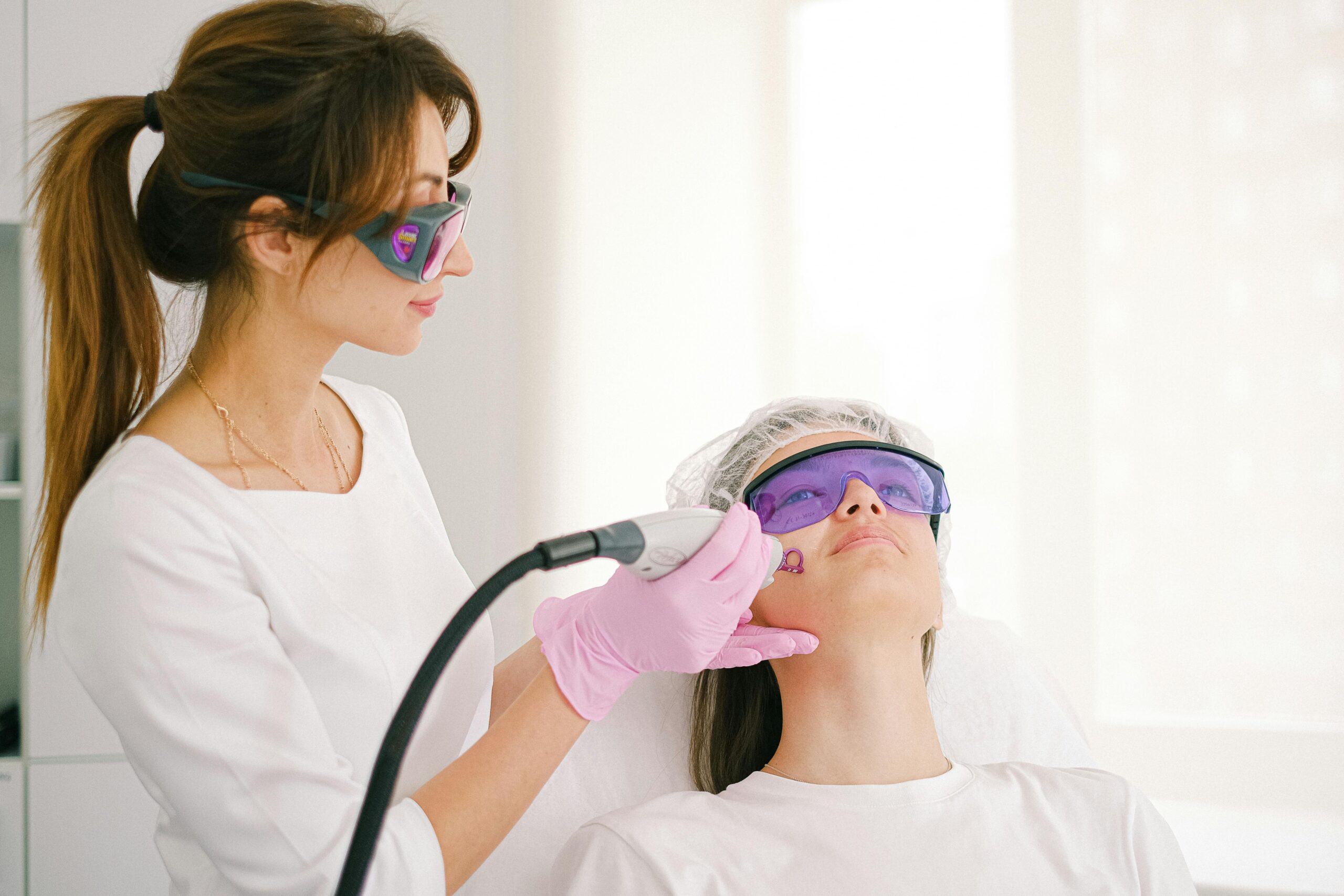
At the more advanced end of the spectrum are laser treatments, which work deeper within the skin to address more established signs of ageing. We covered everything you need to know about laser treatments for anti-ageing in our guide on laser skin resurfacing.
These treatments are particularly effective for sun damage, uneven pigmentation, and deeper wrinkles. By stimulating collagen and resurfacing the skin, they can deliver significant and longer-lasting improvements.
Importantly, laser treatments tend to be most effective when skin quality has been maintained over time. When ageing has progressed without earlier preventative care, achieving optimal results often becomes more complex and may require a combination approach.
At this stage, the focus is no longer just prevention or early correction, but rebuilding skin quality where cumulative damage has already occurred. This is why earlier preventative care often leads to more predictable and natural results later on.
Please note: Not all treatments are suitable for every patient. Skin type, medical history, lifestyle, and individual skin concerns should always be assessed during a professional consultation before proceeding with treatment.
There is no single correct age to begin anti-ageing treatments. Instead, the key factor is identifying early changes in skin quality and introducing appropriate preventative care at the right time.
Increasingly, modern aesthetics recognises that prevention and maintenance are often more effective than trying to reverse established ageing later in life. Maintaining collagen, hydration, elasticity, and overall skin quality over time leads to more natural and sustainable outcomes.
This is why consultations at Pitshanger Clinic focus on long-term skin health and personalised treatment planning rather than a one-size-fits-all approach.
As a general guide:
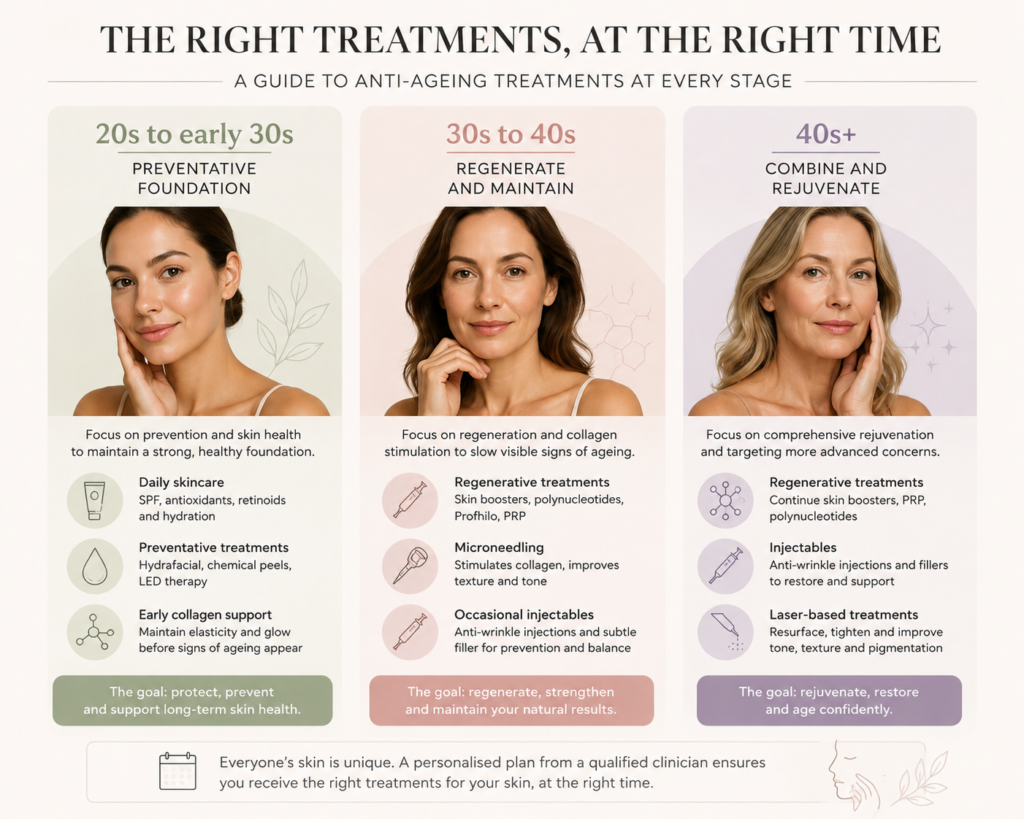
The key shift in modern aesthetics is doing less, earlier, rather than more, later. Subtle, consistent treatments tend to deliver the most natural and long-lasting results.
One of the most common misconceptions around aesthetics is that there is a single "best" treatment. In reality, anti-ageing is far more nuanced. It involves layering treatments over time, adapting to changes in the skin, and focusing on long-term maintenance.
For some, this may mean prioritising skin quality through microneedling, regenerative skin boosters, and chemical peels. For others, it may involve combining injectables with occasional laser treatments.
Equally, there should never be pressure to reverse ageing. Aesthetic treatments can support skin health and confidence, but a minimal approach (or none at all) is equally valid. The right approach is always the one that feels comfortable, confident, and aligned with how you want to look and feel.
If you are considering anti-ageing treatments for your skin, the most valuable first step is a professional consultation with our expert skin-care clinician Dr. Mehta. This allows a detailed assessment of your skin quality, concerns, and the most appropriate stage of treatment.
At Pitshanger Clinic in West London, treatments are designed around a personalised, medically led approach focused on prevention, maintenance, and long-term skin health.
Whether you are looking to maintain skin quality with preventative treatments, improve early signs of ageing with regenerative procedures such as microneedling, or address more advanced concerns with injectables or laser treatments, Dr Mehta's approach focuses on balanced, natural-looking outcomes that work in harmony with your features.
Book a consultation with Dr Mehta at Pitshanger Clinic to discuss which anti-ageing treatments are most suitable for your skin and when the right time to start may be.
Get in touch with our expert medical team in West London to schedule your consultation.
Contact Us Today