Opening hours: Monday - Friday 09:00 - 20:00 Saturday 09:00 - 19:00 Sunday Closed
Opening hours: Monday - Friday 09:00 - 20:00 Saturday 09:00 - 19:00 Sunday Closed


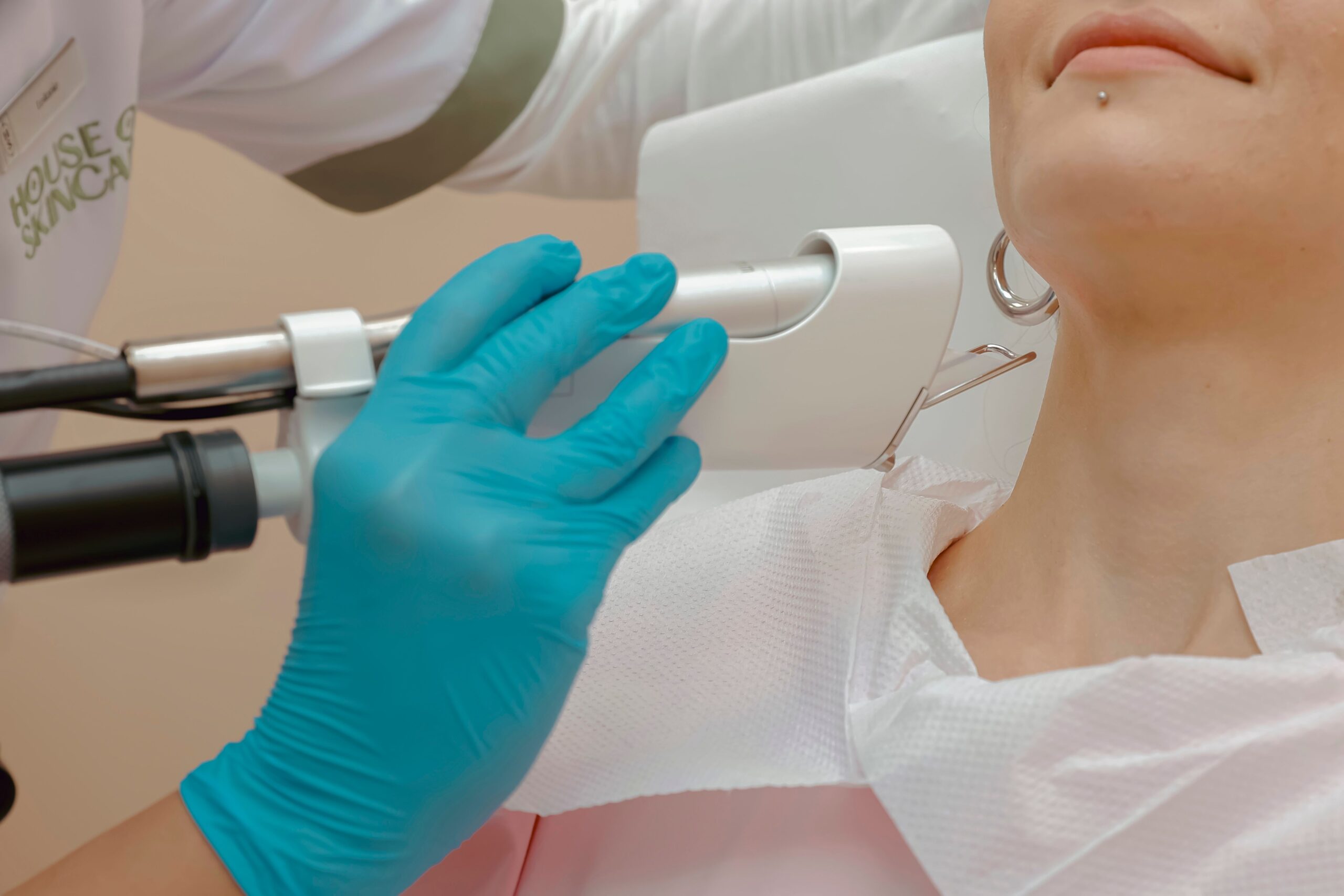
Most people do not start their skin journey with laser treatment. In reality, laser is often something patients consider later, after they have established a good skincare routine or explored treatments such as facials, skin boosters, microneedling, or polynucleotides. It is often the point where concerns become harder to ignore: pigmentation that continues to return, skin texture that no longer responds to peels, or fine lines that are becoming more noticeable despite consistent skincare.
At that stage, laser begins to feel less like an optional aesthetic treatment and more like a structured way of improving skin quality at a deeper level.
At Pitshanger Clinic, laser treatment is typically introduced as part of a broader, medically led anti-ageing plan rather than as a standalone procedure. The goal is not aggressive resurfacing or dramatic change. Instead, the focus is on improving skin quality in a controlled and progressive way that supports long-term skin health and natural-looking results.
One of the biggest developments in aesthetic medicine over the past decade has been a better understanding of how skin ages. Historically, anti-ageing treatments focused heavily on correcting visible signs of ageing once they had already developed. Today, the emphasis is increasingly on preserving skin quality, maintaining collagen production, and slowing the progression of age-related changes before they become more difficult to treat. As covered in our blog article on anti-ageing treatments and when to start them, prevention is now central to modern aesthetics.
Laser treatment plays an important role within this approach because it targets some of the underlying changes that occur as skin ages.
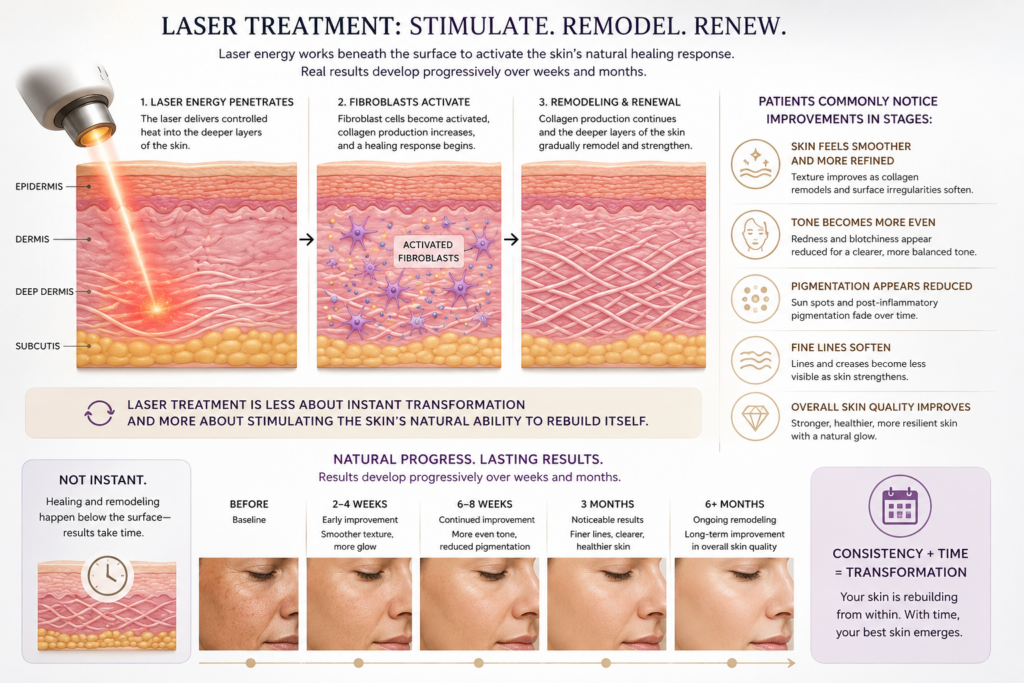
Over time, collagen production naturally declines. Sun exposure accumulates, pigmentation becomes more visible, skin texture becomes less refined, and the skin's ability to repair itself gradually slows. Laser treatments work by creating a controlled stimulus within the skin, encouraging the body's natural repair mechanisms to produce new collagen and remodel damaged tissue.
This is why laser is often viewed as one of the most effective treatments for improving overall skin quality rather than simply masking visible signs of ageing.
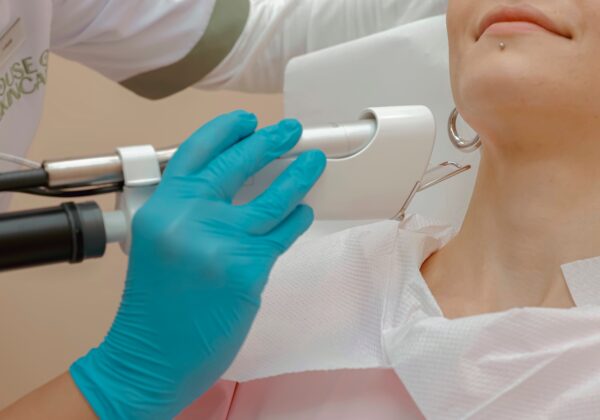
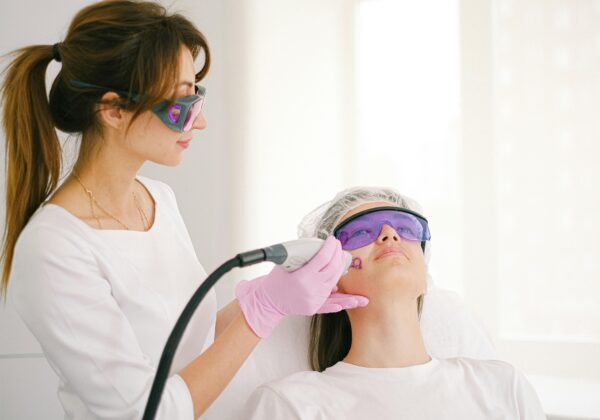
Over the last decade, skin laser technology has evolved to deliver more precise, natural-looking rejuvenation with significantly reduced downtime and safer protocols for a wider range of skin tones. Laser devices deliver highly focused light energy into the skin at specific wavelengths. Different wavelengths interact with different structures within the skin, such as water, pigment, blood vessels, or collagen-rich tissue. When this energy reaches its target, it creates a controlled thermal response. The body interprets this as a stimulus for repair and regeneration.
From a clinical perspective, the real benefit comes from what happens afterwards.
Fibroblast cells become activated, collagen production increases, and the deeper layers of the skin begin a gradual process of remodelling. This process takes time, which is why laser results tend to develop progressively over weeks and months rather than appearing immediately.
Patients commonly notice improvements in stages:
Laser treatment is therefore less about instant transformation and more about stimulating the skin's natural ability to rebuild itself.
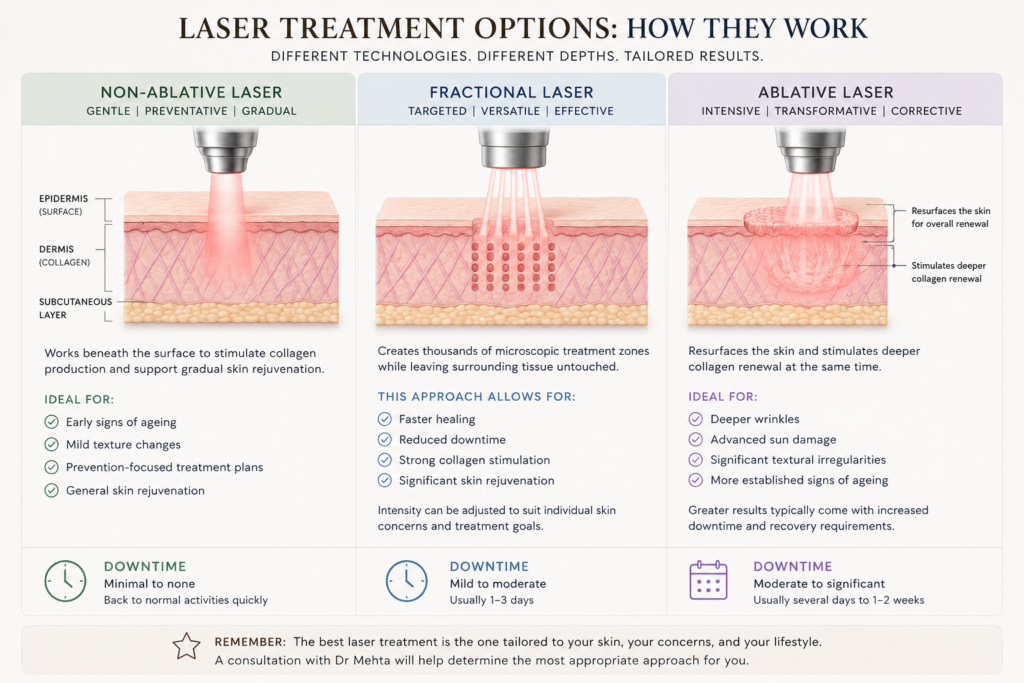
One of the most common misconceptions is that "laser treatment" refers to a single procedure. In reality, there are multiple laser technologies available, each designed to address different concerns, depths, and skin types.
The choice of laser depends on factors such as:
Non-ablative lasers work beneath the surface to stimulate collagen production and support gradual skin rejuvenation. Recovery is typically minimal, as this treatment works in a controlled and gentle way. Results appear gradually over a series of sessions, making it ideal for those who prefer subtle improvements without significant downtime.
These treatments are often used for:
Fractional laser technology has become one of the most widely used approaches in modern aesthetics. Rather than treating the entire skin surface, fractional lasers create thousands of microscopic treatment zones while leaving surrounding tissue untouched.
This approach allows for:
Because treatment intensity can often be adjusted, fractional laser systems are highly versatile and can be tailored to individual patient needs.
Ablative lasers represent the most intensive category of laser treatment. They resurface the skin and stimulate deeper collagen renewal at the same time. As a result, they can produce significant improvements in:
However, greater results typically come with increased downtime and recovery requirements. For this reason, ablative laser treatments are generally reserved for patients with more advanced concerns or specific treatment goals.
Laser treatment is particularly effective when the primary concern relates to skin quality, texture, or cumulative sun damage.
Common concerns that may respond well to laser treatment include:
However, laser treatment does have limitations. It cannot replace lost facial volume, reposition sagging tissue, or significantly alter facial structure. In these situations, other treatments such as dermal fillers, skin boosters, or regenerative treatments may be more appropriate. Understanding this distinction is essential when creating realistic treatment expectations.
Many patients assume laser should be the first treatment they consider. In practice, it is often introduced after a strong foundation has already been established. At Pitshanger Clinic, this foundation commonly includes:
When skin quality has already been supported through these measures, laser treatment can often deliver more predictable and longer-lasting outcomes.
This reflects one of the central principles of modern anti-ageing medicine: prevention and maintenance generally produce better long-term results than waiting until significant ageing changes have developed.

"The best laser results rarely come from laser alone. When patients invest in prevention, skin health, and collagen support earlier on, laser treatments become significantly more effective. My approach is always to build strong foundations first and then use laser strategically to enhance and maintain skin quality over time."
— Dr Surina Mehta
One of the reasons laser treatment has become increasingly popular is its ability to address cumulative skin damage. Many visible signs of ageing are not caused by age alone. A significant proportion of skin ageing is linked to environmental exposure, particularly ultraviolet radiation. Years of sun exposure can contribute to pigmentation changes, collagen breakdown, uneven texture, and loss of elasticity.
This is one reason why patients who have prioritised preventative skincare and sun protection throughout life often require less intensive treatment later on.
Conversely, when skin damage has accumulated over many years, achieving meaningful improvement may require multiple treatment modalities rather than a single laser session.
Laser treatment can still produce excellent results, but expectations should be aligned with the degree of existing skin change.
Laser treatment should never be approached as a one-size-fits-all procedure. Small adjustments in wavelength, energy settings, pulse duration, and treatment depth can significantly influence both results and recovery.
Patient assessment is therefore critical. Factors such as skin type, pigmentation risk, medical history, sun exposure habits, and treatment goals all influence whether laser treatment is appropriate and which technology is most suitable.
At Pitshanger Clinic, every laser treatment begins with a detailed consultation and skin assessment to ensure treatment is selected safely and appropriately. We deliver laser treatments as part of a medically led approach focused on long-term skin health rather than isolated procedures.
The clinic uses the advanced LEO Laser platform, which allows treatments to be customised according to individual skin concerns, treatment goals, and downtime preferences. This flexibility helps support a wide range of indications, from pigmentation and texture concerns through to more advanced skin rejuvenation treatments.
If you are considering laser treatment, the most important first step is understanding where your skin currently sits within the ageing process and whether laser is the most appropriate treatment for your concerns.
For some patients, laser may be the next logical step. For others, improving skin health through regenerative treatments or preventative care may create a stronger foundation first.
At Pitshanger Clinic in West London, every treatment plan is designed around long-term skin health, prevention, and natural-looking outcomes.
Book a consultation with Dr Mehta to discuss whether laser treatment is suitable for your skin and how it may fit into your wider anti-ageing strategy.
Get in touch with our expert medical team in West London to schedule your consultation.
Contact Us Today